In the 19th century, National Romanticism emerged in Norway. Artists were concerned with showing what was unique about the country, and nature was given an important role. Mountains, forests, and waterfalls became symbols of the Norwegian landscape. Waterfalls were particularly popular motifs because they expressed the power of nature.
The Labro Falls near Kongsberg became a subject that several artists wanted to paint. Johan Christian Dahl visited the waterfall during his journey through Norway in 1826. There, he made sketches of the landscape, which he later used when painting images of the waterfall. In his paintings, the power and movement of the water take center stage. In the painting The Labro Falls from 1828, Dahl also included a peasant family dressed in traditional Norwegian bunads. In this way, National Romantic artists depicted both the landscape and the people who lived in it - as an expression of what was distinctly Norwegian.
- 1/1
The Labro Falls by Johan Christian Dahl, 1828.
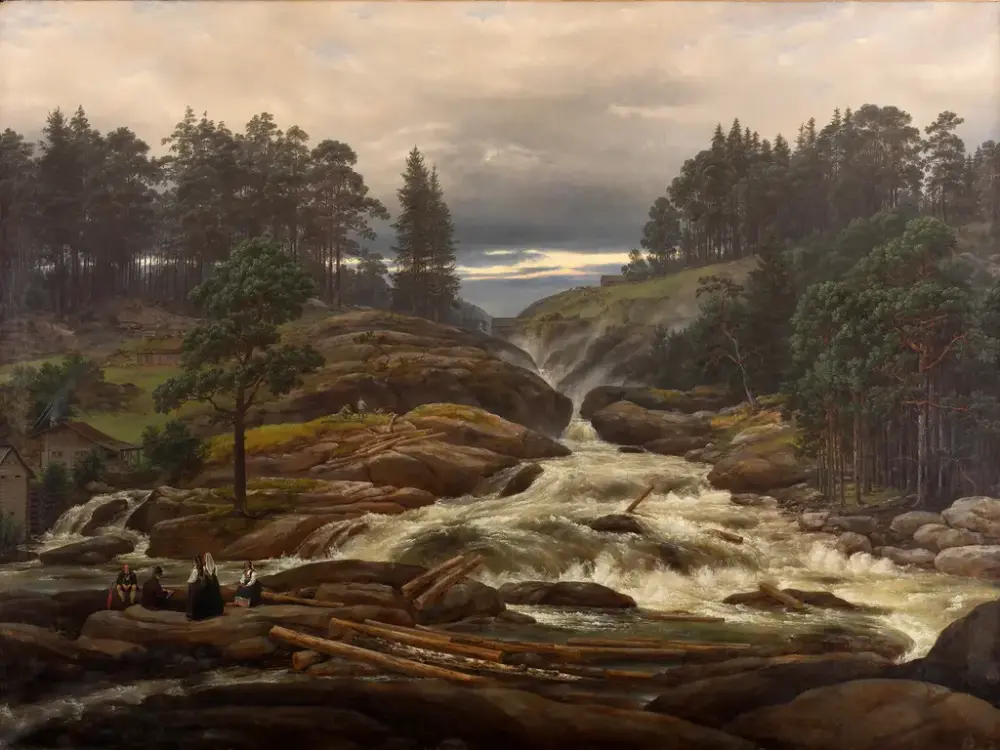
Thomas Fearnley visited The Labro Falls in 1836 and painted The Labro Falls at Kongsberg the following year. In the painting, the contrast between the dark forest and the bright, foaming water is emphasized. Such powerful experiences—where nature both frightens and attracts—were important in Romantic art. The painting is among the first four works in the National Museum’s art collection.
- 1/1
The Labro Falls at Kongsberg by Thomas Fearnley, 1837.
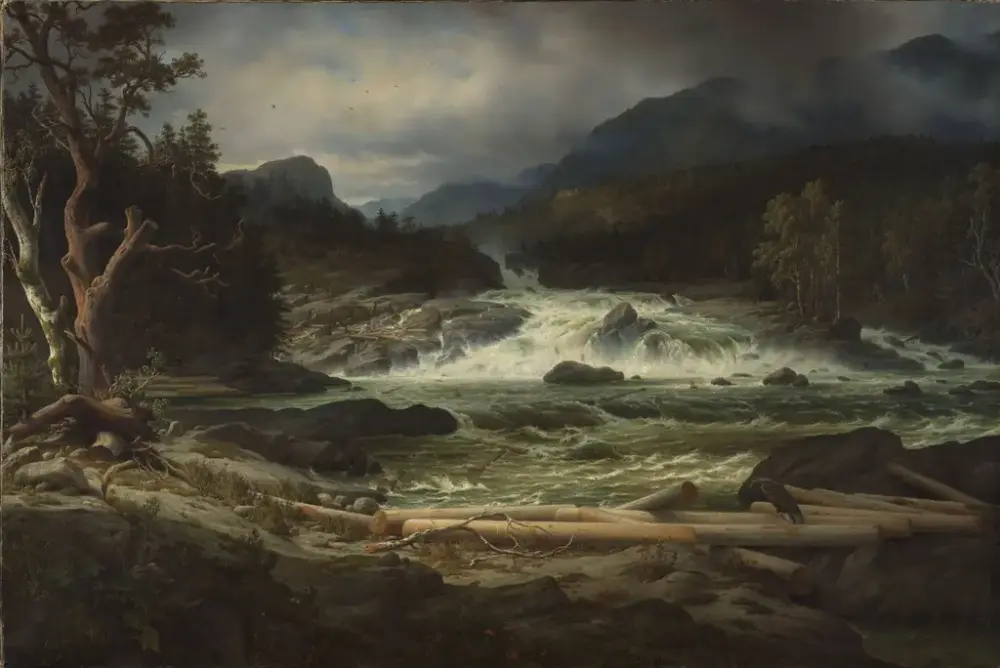
When Hans Gude painted The Labro Falls in 1862, landscape painting had become more naturalistic and detailed. His painting of the waterfall is also part of the National Museum’s collection today.
- 1/1
The Labro Falls by Hans Gude, 1862.
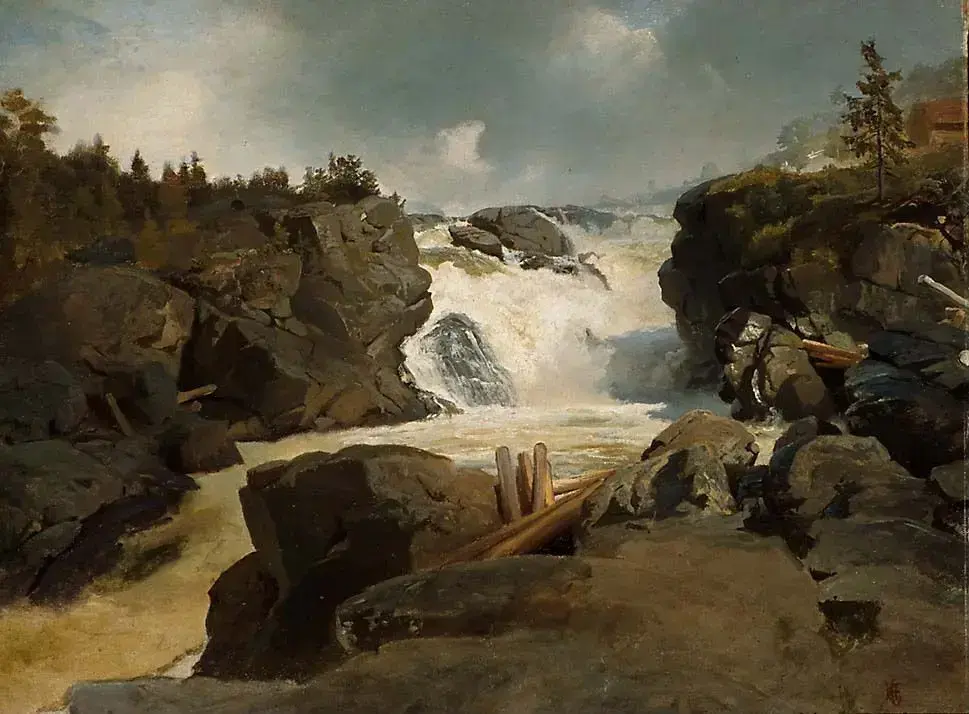
National Romanticism lasted until around 1870. In 1872, the waterfall was purchased and regulated in connection with the establishment of the Labro pulp mill, and it was no longer as interesting a subject for painters.