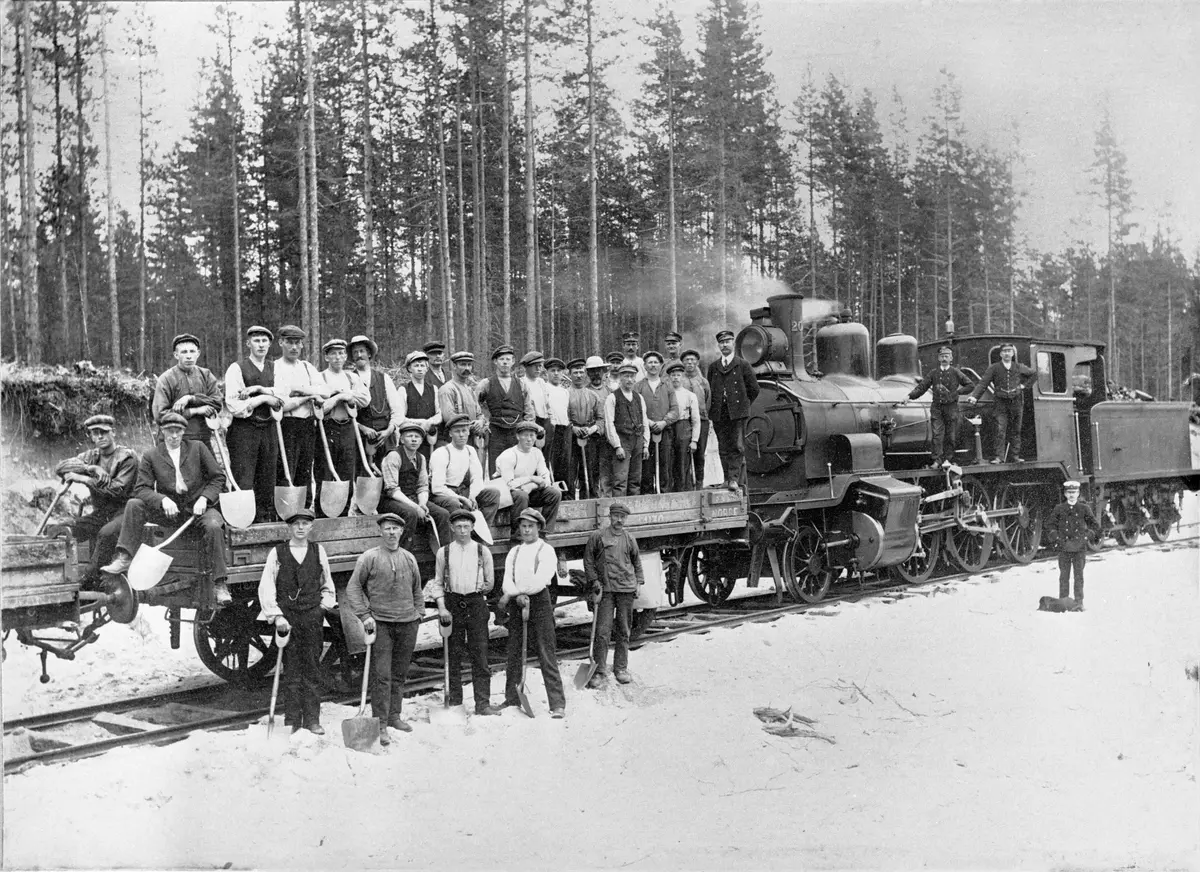
The construction of Krøderbanen took two years. To keep costs down, the railway was built with Carl Pihl’s narrow gauge, with 1067 mm between the rails. The railway is 26 kilometres long, with many sharp curves and steep inclines. Because of the gauge, and the way the railway followed the landscape, it was the cheapest railway built in Norway, per kilometre.
King Oscar II and queen Sophie of Sweden and Norway were the first to travel on Krøderbanen, the 19th of Nevember 1872, about a week before the official opening. Large crowds turned up, there were speeches and marching bands, and an official dinner. The locomotive driver received a personal tip from the king.
The official opening a week later, happened without any fanfare.
Krøderbanen was built to connect the vast forests around lake Krøderen, and further north in Hallingdal with the industry in the Drammen River. It would also create greater connectivity for the inhabitants and businesses further north and west. The railway allowed for transport of goods year-round, and not only in the winter.
In 1896, construction of the Bergen Line began. The final years before its opening in 1909 marked the golden age for both Krøderbanen and the steamboats on the lake. Three times the usual amount of goods was transported. Materials for the construction of the Bergen Railway were shipped via Krøderbanen and then by steamboat to Gulsvik. The last few months before the Bergen Line opened, passenger traffic between Oslo and Bergen ran on Krøderbanen, passenger numbers multiplied. The Bergen Line opened 27th of November 1909, and with that the golden age ended.
Krøderbanen was converted from narrow to standard gauge in 1909. It happened in a single day. After the evening train ran on October 30, 1909, all narrow-gauge equipment was gathered. The next day, 1,000 men went to work, relaying the tracks. The morning train on November 1 was the first standard-gauge train on the line, marking the start of a new era in the history of Krøderbanen.
- 1/1
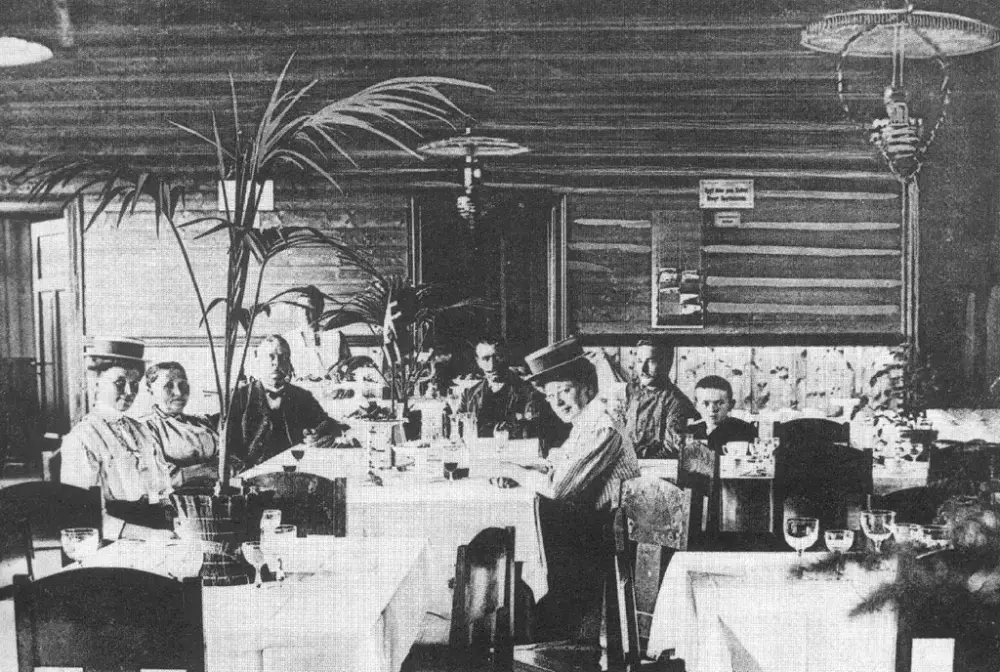
Restauranten på Krøderen stasjon under byggingen av Bergensbanen
After the conversion to standard gauge, Krøderbanen gradually became a more dedicated freight railway.
In 1940, Norway was invaded and occupied by Nazi Germany. For Krøderbanen, this was not particularly dramatic. Passenger numbers increased, as many private cars were confiscated and fuel became very expensive. The steam locomotives were fired with wood instead of coal.
During the war food was scarce, especially in the cities. There were extra lingonberry trains to Kløftefoss. These trains became so crowded that additional freight cars with benches were added so everyone could find a seat. Due to the high demand, an official start date for lingonberry picking was set, and people began referring to the following days as the "1st and 2nd lingonberry day." The Nazis enforced this start date with weapons, and those who started early risked being shot. We don’t know if anyone was killed, but several people were shot at and chased out of the forest.
The last passenger steam train ran in 1948. After that the passenger service used motor carriages. These were a lot faster than the old steam trains, which combined freight and passenger service.
This was not enough to save the passenger service. The motor carriages lasted until 1958, outcompeted by buses also run by the Norwegian state railway. This sparked a lot of discussion in the local communities.
The freight service continued as normal until 1967. After that all freight trains had to be specifically ordered. The last ever freight train left the station 28th of February 1985. It had a single carriage, filled with haybales.
- 1/1
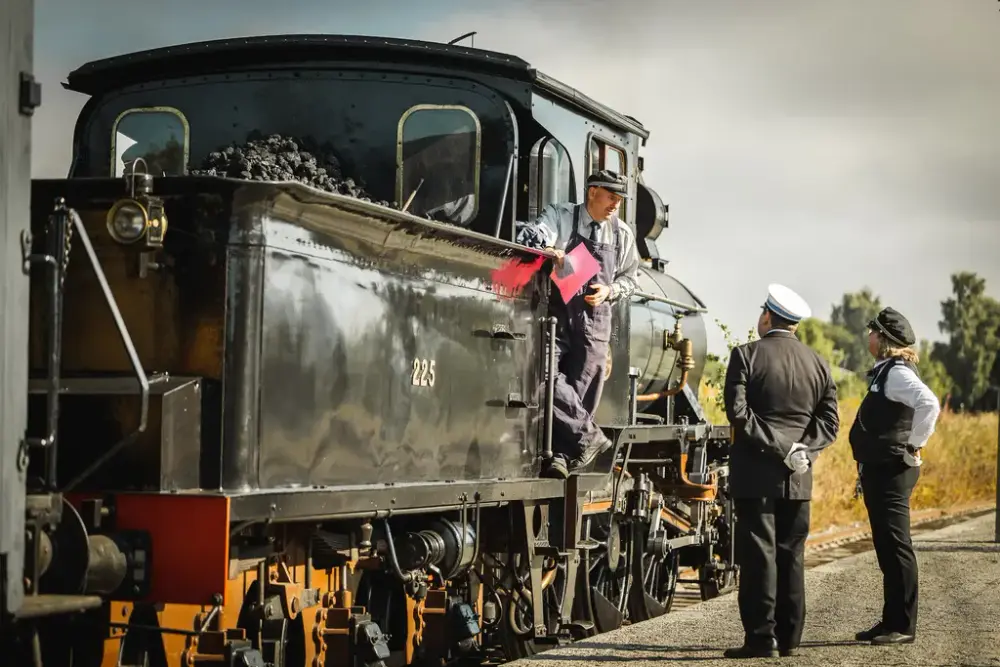
The very first museums train ran in 1966. This is from 2022